
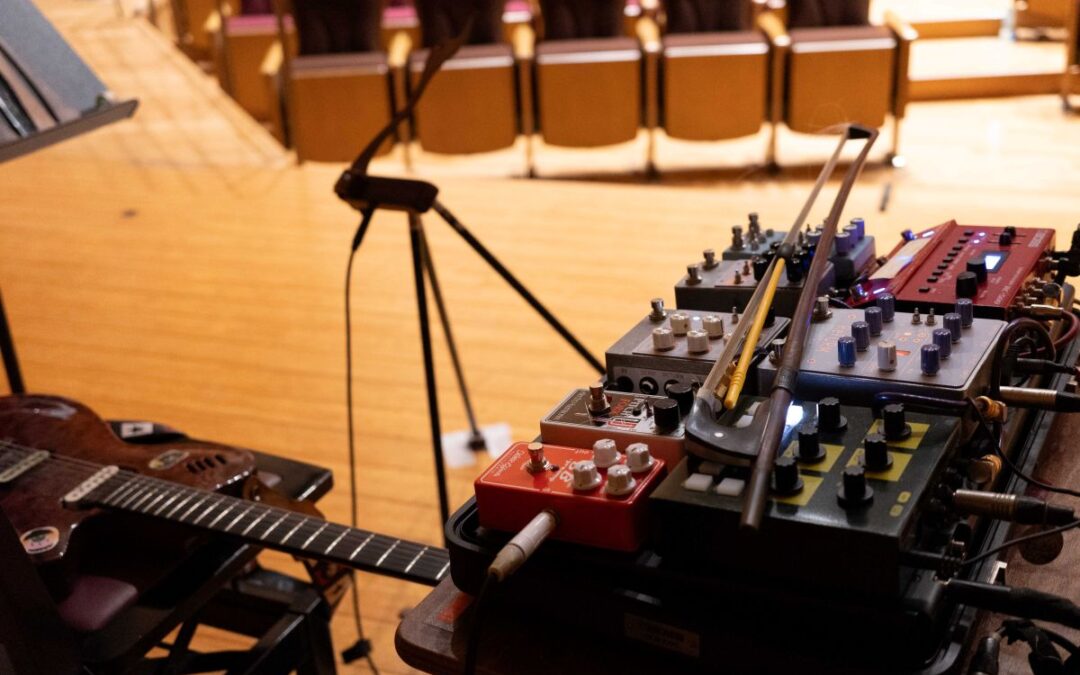
As a guitarist, your gear can make a huge difference in how you establish your unique sound as an artist. One of the most powerful ways to transform your playing is by experimenting with guitar pedals. They are the hidden tools behind many iconic tones and can help you find your own sound.
With endless pedal possibilities, finding the right ones can be a real adventure. This guide includes detailed overviews of different types of pedals and the sound they produce. We’ve also included a step-by-step tutorial to help you build a sturdy pedalboard for live shows and studio sessions. Learn how to get the most out of every stompbox you buy.
Why Guitar Pedals Matter for Your Sound
Think about the unforgettable solos of Jimi Hendrix or the echoing soundscapes from The Edge of U2. Guitar pedals were a key part of their signature tones. Pedals are not just effects, they can turn your basic amp sound into something creative and unique. If you want to get noticed as a guitarist, understanding pedals will help you stand out.

Blog Post
"*" indicates required fields
By submitting this form, I authorize Musicians Institute (MI) to make or allow the placement of calls, emails, and texts to me at the phone number that I have provided, including through the use of automated technology, or a prerecorded or artificial voice. I understand that I am not required to provide my phone number as a condition of purchasing any property, goods, or services. I agree to the terms of MI’s Privacy Policy. MI will not sell or rent your information to third parties, and you may unsubscribe at any time.
It’s easy to feel overwhelmed by the number of options in music stores and online, especially if you’re a beginner. Whether you are getting your first pedal or organizing a bigger board, you need a clear plan. This guide will help you understand what each pedal does, how to set up your board, and how to unlock your best possible tone.
Understanding the Main Types of Guitar Pedals
Ready to dive in? Here’s a breakdown of the main pedal types. These are the building blocks of almost any professional guitar rig.
Essential Pedals Every Guitarist Should Own
Every player needs a tuner pedal. It keeps your guitar in perfect tune and lets you mute your signal on stage, which is useful when switching guitars or tuning up quietly. After that, consider a boost pedal. This pedal helps your solos stand out and adds clarity to your clean tones.
A volume pedal gives you precise control over your guitar’s loudness. It is great for smooth volume swells, controlling your output between songs, or making subtle changes during a set. Together, these three pedals make up the core of any pedalboard for beginners and experienced players alike.
Shaping Your Tone: Dynamics and Pitch Effects
Once you have the essentials, it is time to expand your sound. Compressor pedals make your playing smoother by evening out your notes and adding sustain. They are popular in funk, country, and pop because they help both chords and solos stand out.
Octave and pitch shifter pedals are perfect if you want to experiment. They can create bass-like tones, harmonies, or even wild effects that sound like a synthesizer. These pedals help you break free from traditional guitar sounds and find something unique.
Gain, Distortion, and Fuzz Pedals
No pedalboard is complete without at least one drive pedal. Overdrive pedals recreate the natural breakup of a tube amp. They produce warm, dynamic tones perfect for blues, classic rock, or pop. Distortion pedals offer heavier, more aggressive tones that are essential for rock, punk, or metal.
Fuzz pedals are the secret to thick, bold sounds heard in classic rock and shoegaze. They create saturated, textured tones that help your guitar stand out in the mix. Try stacking drive pedals to see how your tone changes and find the sound that suits your music.
Modulation Effects for Texture and Depth
Modulation pedals give your playing a sense of movement and depth. Chorus pedals make your guitar sound wider, as if more than one person is playing. Phasers and flangers offer swirling effects that work well in psychedelic, alternative, and funky music.
Don’t overlook tremolo and vibrato. Tremolo changes your volume in a rhythmic way, while vibrato gives your pitch a gentle wobble. Adding these pedals can turn a basic part into something unforgettable.
Time-Based Effects: Delay and Reverb
To create atmosphere and space, you need delay and reverb pedals. Delay pedals repeat your notes, from short slapbacks for rockabilly to long echoes for dreamy or ambient parts. Reverb pedals make your guitar sound like it is in a specific space, whether it’s a small club or a giant hall. These two effects help tie your whole sound together.
Wild Card Pedals: Wah and Loopers
If you want to add more expression or become a one-person band, check out wah pedals and looper pedals. A wah pedal creates a vocal, “wah-wah” effect that works great in funk, blues, and solos. A looper pedal lets you record and layer riffs live, making it easy to practice, write, or perform on your own.
Building a Pedalboard for Live Performance
When you bring your pedals to the stage, reliability and simplicity become just as important as your sound.
Consistency Is Key for Live Shows
A good live setup should work every night, without surprises. Most pros stick to a few key pedals they use for every show. Only bring the pedals you need for your setlist. A simple, reliable board helps you focus on playing your best.
The Best Pedal Order for Gigs
Most guitarists use a classic order for their pedals:
Guitar > Tuner > Utility > Wah > Pitch > Drive > Modulation > Ambience > Amplifier
That’s written left-to-right so that it makes sense as you read it, but if you were looking down at your pedals, you’d want them arranged in reverse, like this:
Amplifier > Ambience > Modulation > Drive > Pitch > Wah > Utility > Tuner > Guitar
– Ray McClelland for GuitarGuitar
This order keeps your effects clean and clear. Drive pedals shape your tone before it is colored by delay or reverb, which keeps your sound tight. Always test your pedal order and make small changes until it feels right for you.
Why Tap Tempo Is Important
If you use a delay pedal for live gigs, get one with a tap tempo feature. This lets you set the timing of your echoes to match the speed of each song, which helps your repeats always land perfectly in time.
How to Prevent Noise On Stage
Pedalboards can get noisy, especially with distortion or high-gain pedals. A noise gate pedal helps remove unwanted hiss and feedback. You should also use an isolated power supply to prevent hum and interference. Never rely on cheap daisy chain power adapters for gigs.
Pro Tips for Live Setups
Keep your cables organized to avoid problems during your set. Use zip ties or Velcro to keep everything neat. Always bring extra cables, spare batteries, and a backup guitar cable in case something goes wrong during a show.
The Best Pedals for Studio Recording
Recording in a studio is all about tone quality and precision. Here, less can be more. Often, just a few carefully chosen pedals can give you the best results.
Focus on Tone in the Studio
The best studio setups aim for clear, flexible sound. Recording through a real amp and microphone can bring out the full character of your pedals. Many players also use amp simulators like the Strymon Iridium or UA Dream, which are perfect for silent recording at home or in smaller studios.
Why Studio-Grade Pedals Matter
In the studio, premium reverb and delay pedals from brands like Strymon and Eventide can add space and dimension that plugins might not match. Transparent overdrives and boosts like the Xotic EP Booster or Klon-style pedals add a touch of grit without coloring your basic tone. A good EQ pedal is also valuable, letting you shape your sound before it ever hits the computer.
Tips for Recording with Pedals
Always record a dry signal alongside your effects. This gives you the flexibility to re-amp or add effects later if you want to change your sound. Often, a lightly driven amp records better than heavy distortion. You can also use automation in your recording software to get consistent effects throughout your track.
How to Build a Pedalboard: A Step-by-Step Guide
Building your first pedalboard doesn’t have to be difficult. Follow these steps to get a setup that works for you.
Step 1: Figure Out What You Need
Think about the styles you play and the sounds you can’t live without. Are you playing live, recording, or both? A basic board for most players starts with a tuner, overdrive, delay, and reverb. As your needs grow, you can add more drives and modulation effects.
Step 2: Pick a Pedalboard and Power Supply
Choose a pedalboard that fits your current pedals and leaves space for new ones in the future. Brands like Pedaltrain and Templeboard are good options. For power, use an isolated power supply to keep your rig quiet and dependable.
Step 3: Plan Your Layout
Lay out your pedals on the floor or trace a paper outline of your board before attaching anything. Put your most-used pedals where you can reach them easily, and leave extra space for patch cables.
Step 4: Secure and Wire Your Pedals
Use Velcro or dual-lock strips to secure each pedal to the board. Use pancake-head patch cables to save space. Keep your wiring neat with zip ties or cable clips.
Step 5: Test Everything and Make Adjustments
Once your board is set up, plug in and play. Try different pedal orders and move things around until you are happy with your tone and your setup.
Your Journey Starts Here
Getting started with guitar pedals can open up new creative directions for your music. Begin with a few essential pedals and expand as you learn more about your sound. Remember, your pedalboard should feel like an extension of your musical personality.
At Musicians Institute, we help young musicians master their gear and their instrument, giving you the skills you need for a successful career in music.
Check out how the Guitar Program at Musicians Institute can help you level up your skills and unlock your professional future.