
Building Your Foundation for Success
Progress as a musician depends on more than just picking up a guitar and strumming a few chords. Many beginners soon realize that frustration and plateaus are common if the proper groundwork isn’t set from the start.
Equipping yourself with the right tools and foundational knowledge is critical for building good technique, ensuring steady progress, and protecting your investment in your gear. The right accessories and resources are essential for anyone serious about learning guitar at home or considering a professional path. In this guide, we’ll explore the 10 must-have tools and resources for the beginning guitarist. From the basics like tuners and cases to professional-level programs, this comprehensive list will give you everything you need to set yourself up for success.
The Digital Tuner: A Non-Negotiable First Purchase
Playing in tune is the bedrock of music. No matter how accurate your finger placement or how much you practice, an out-of-tune guitar will always sound off. This discourages practice, undermines confidence, and can train your ear incorrectly from the beginning.
Types of Tuners and What to Choose
For most beginners, a clip-on (piezoelectric) tuner is the best choice. When you’re just starting out, there’s no one brand that stands out more than any other, but over time you might develop a preference. What matters is that your tuner fits your guitar neck without too much wiggle room. A clip on tuner senses vibrations directly from your guitar’s headstock, and a poor fit can affect its accuracy. These tuners are reliable even in noisy rooms where traditional microphone-based tuners might struggle.

Blog Post
"*" indicates required fields
By submitting this form, I authorize Musicians Institute (MI) to make or allow the placement of calls, emails, and texts to me at the phone number that I have provided, including through the use of automated technology, or a prerecorded or artificial voice. I understand that I am not required to provide my phone number as a condition of purchasing any property, goods, or services. I agree to the terms of MI’s Privacy Policy. MI will not sell or rent your information to third parties, and you may unsubscribe at any time.
Smartphone tuner apps are widely used and convenient for those just starting. While these apps are generally accurate in quiet spaces, they can be less reliable in environments with background noise. Still, for home practice, they provide a solid and accessible option.
The Importance of Consistent Tuning
Learning to tune your guitar every time you play is not just about sounding good, it’s also a great ear-training exercise. Consistent use of a tuner helps you recognize correct pitch and builds musical awareness, both foundational skills for all musicians.
The Metronome: Your Personal Time Coach
A strong sense of rhythm is just as essential as playing the right notes. Enter the metronome, a timeless tool designed to help musicians develop rock-solid timing and internalize tempo.
Why Beginners Avoid the Metronome (and Why That’s a Mistake)
Some new players find metronomes tedious or intimidating, but relying on “feel” alone leads to inconsistent timing. The metronome is the only objective way to measure and improve your sense of time, which is critical in any musical setting.
Using the Metronome Effectively
Start slowly by using the metronome while practicing chord changes, scales, or simple songs at a manageable tempo. As your coordination and confidence grow, gradually increase your tempo. This “slow to fast” approach is standard in music education and ensures mastery at every step.
Metronomes come in various forms: traditional wind-up devices, digital desktop units, and convenient online or app-based versions. All provide the same fundamental benefit of making you a more reliable musician.
The Instrument Case or Gig Bag: Your Guitar’s Armor
A quality case is not just an accessory; it is an investment in the lifespan of your instrument. Physical damage, temperature swings, and humidity changes can all cause serious harm to your guitar.
Hard Cases vs. Padded Gig Bags
Hard cases offer maximum protection and are ideal for storing your guitar at home or traveling long distances. They shield your instrument from impact, while offering some insulation from extreme temperatures or sudden environmental changes.
Padded gig bags are more affordable and portable, perfect for daily use or trips to lessons. These cases are more lightweight and less cumbersome to carry, which is why many musicians prefer them while out and about. They aren’t durable for longer trips, however, as their thin padding can only do so much. If you plan to take your guitar on tour, for example, you may want to consider a hard case to minimize possible damage while in transit.
Your case or gig bag is the first and most important line of defense, protecting both the monetary and emotional value of your instrument.
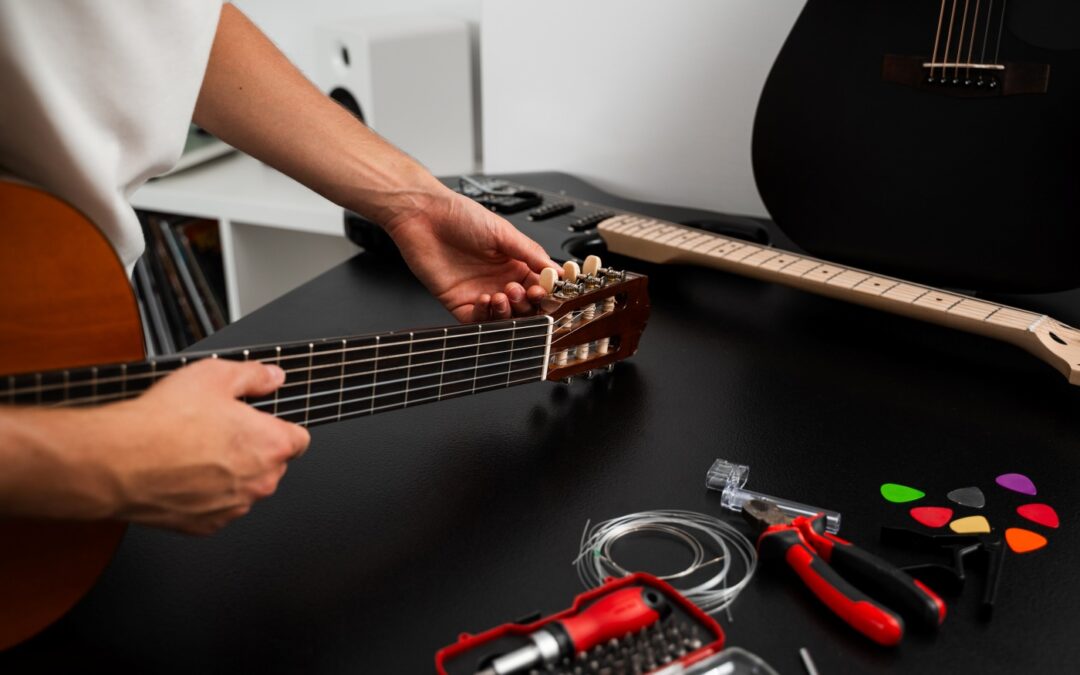
Extra Strings & Basic String-Changing Tools
Strings are the most replaceable part of your guitar, and for good reason. Over time, they lose their tone, accumulate grime, and can snap unexpectedly.
Tools and Supplies to Keep on Hand
Always have at least one extra set of strings available. For most standard electric guitars, a .009-.042 gauge set is a safe bet, but always check your guitar’s recommendations. Acoustic guitars typically use .012-.053 or similar.
A string winder/cutter dramatically speeds up the restringing process, with built-in cutters now standard on many winders. If you play acoustic guitar, a peg winder will make removing bridge pins much easier.
Being prepared means you’ll never lose valuable practice time to a broken or dead string.
Maintenance & Cleaning Tools: Long-Term Care
Regular maintenance not only keeps your guitar looking good but also preserves its tone, playability, and long-term value.
The Essential Cleaning Kit
A microfiber cloth is a must-have. Use this to wipe down your strings and body after every session if possible. Removing sweat and oils regularly prevents corrosion.
Guitar polish (designed specifically for stringed instruments) and fretboard conditioner should be used sparingly during string changes to clean and protect delicate surfaces. Always confirm that the chemicals being used on your guitar are compatible with the wood and finish of your instrument.
The Importance of Humidity Control
Wood is hygroscopic, meaning it absorbs and releases moisture based on its environment. Low humidity can cause cracks, while high humidity may lead to swelling or warping. For acoustic guitars, use a soundhole humidifier and a small hygrometer to monitor the climate inside your case. This simple step can save your instrument from serious damage and maintain its value for decades.
Proper Support: Picks, Straps, and a Stable Footrest
Accessories that support your playing technique are as important as the instrument itself.
Guitar Picks
There’s no one “right” or “wrong” pick style when you’re just starting out. This is more about personal preference, as some musicians will prefer a sturdier pick while others play better with a flexible pick. Experiment with different pick brands and thicknesses (thin, medium, and heavy) to find what feels best and produces your preferred sound. Picks are inexpensive but essential for dynamic playing and control.
Adjustable Guitar Strap
An adjustable strap is necessary if you plan to play standing up. For safety, ensure the strap is attached with strap locks or another secure system, which helps prevent accidental drops.
Footrest or Ergonomic Support
Using a footstool or ergonomic guitar support elevates your leg, placing the guitar in an optimal playing position. This reduces back strain and encourages proper left-hand technique, a recommendation widely supported by music educators and physiotherapists. Establishing good posture early is important for your long-term health as a musician.
The Physical Tool: Warm-Ups & Hand-Strengthening Exercises
Playing guitar is a physical activity, and neglecting your hands can lead to injury. Regular warm-ups and stretching are key to preventing issues such as tendonitis.
Pre-Play Stretches and Exercises
Start every session with gentle stretches for your fingers, wrists, and forearms. The National Institutes of Health (NIH) and performing arts medicine associations recommend these routines to improve flexibility and reduce injury risk.
Beginner finger exercises like “spider walks” (moving one finger per fret on a single string) are effective for building independence and strength without straining your hand.
The Guidance Tool: A Knowledgeable Instructor or Mentor
While online tutorials and apps are valuable, a real-life instructor provides something technology can’t: real-time, personalized feedback.
The Value of Expert Guidance
A skilled teacher can identify and correct bad habits early, preventing them from becoming ingrained and harder to fix. Common beginner mistakes like improper posture, wrist angle, or thumb placement can be skipped altogether with the right guidance. Structured learning paths and customized lesson plans ensure efficient, logical progress, a pedagogical approach supported by decades of music education research.
A mentor also offers accountability, motivation, and answers to context-specific questions. Pre-recorded videos can only do so much, and even one or two in-person lessons can help you get ahead if regular lessons aren’t an option.
The Information Tool: Reliable Learning Resources
Quality information is critical for effective learning. Relying on random internet searches can lead to confusion or misinformation.
Where to Find Trusted Resources
Structured video courses from legitimate sources provide step-by-step guidance that is both progressive and vetted by professionals. Beginner method books offer a curriculum designed for clear progression.
Always prioritize content from credentialed teachers or established institutions. This ensures that you are building your skills on a solid, factual foundation.
The Ultimate Tool for a Professional Career: Formal Education at Musicians Institute (MI)
For those considering a professional path, tools alone are not enough. Music college can provide the comprehensive training needed to thrive in the music industry.
Why Choose Musicians Institute’s Guitar Performance Program?
Located in Hollywood, California, Musicians Institute provides unmatched exposure and networking opportunities. The Guitar Performance Program is designed to expand students’ technical proficiency and stylistic versatility, while helping them deepen their musical vocabulary across genres.
Students learn from working musicians, producers, and industry experts, gaining current, real-world insights that reflect the demands of today’s music scene. The curriculum includes core studies in ear training, music theory, sight-reading, and improvisation, all of which are essential for professional session and touring musicians.
Live performance opportunities in real venues are central to the program, preparing students for the realities of a guitarist’s career. MI also offers structured networking events, showcases, and career guidance, connecting students directly with industry professionals.
While formal education is not the only path to a music career, programs like Musicians Institute offer a focused, industry-connected environment that accelerates growth and opens doors.
Invest in Equipment and Education for the Long Haul
The right tools are not just conveniences; they remove barriers, protect your investment, and instill professional habits from day one. Whether you’re learning guitar at home or aiming for the stage, equipping yourself with these essentials will maximize your progress and enjoyment.
Investing in quality tools and guidance is investing in your musical future. Start with the basics: grab a tuner and metronome, seek out reliable instruction, and always care for your instrument. For those with big ambitions, advanced training at Musicians Institute can be the ultimate tool in reaching your goals.
View our 2026 Course Catalog to learn more about the classes available at MI. Ready to take your music education to the next level? Contact our admissions team today.