
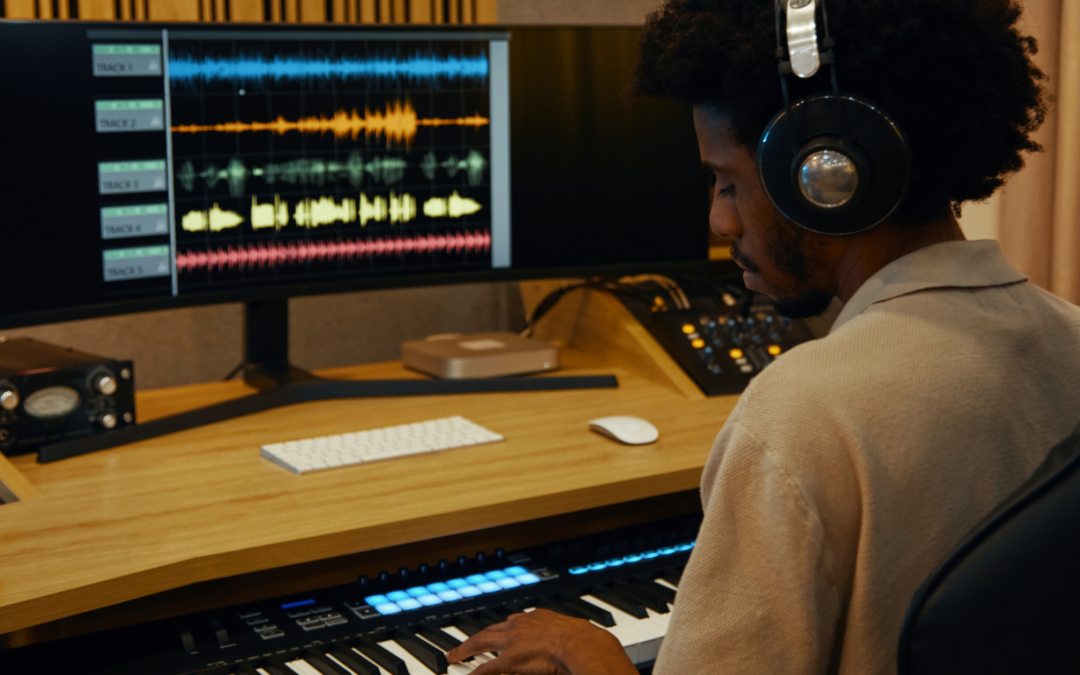
In today’s music industry, the keyboard is more than an instrument. Because of its variety of uses, it’s often considered the foundation of modern production. From building chord progressions and programming MIDI to designing synth sounds and scoring visual media, keyboard skills give producers the creative control and technical flexibility needed to compete professionally.
Whether you’re creating hip-hop beats, pop tracks, electronic music, or film scores, learning how to use a keyboard in music production can dramatically improve your workflow and artistic range.
In this guide, we’ll explore:
-
Why keyboards are essential for producers
Blog Post
"*" indicates required fields
By submitting this form, I authorize Musicians Institute (MI) to make or allow the placement of calls, emails, and texts to me at the phone number that I have provided, including through the use of automated technology, or a prerecorded or artificial voice. I understand that I am not required to provide my phone number as a condition of purchasing any property, goods, or services. I agree to the terms of MI’s Privacy Policy. MI will not sell or rent your information to third parties, and you may unsubscribe at any time.
-
How to set up a MIDI keyboard
-
Practical studio techniques
-
Whether you need piano skills
-
How professional training accelerates your growth

Why the Keyboard Is Essential in Modern Music Production
Professional producers rely on keyboard fluency because it connects musicianship with technology.
Faster Harmonic Development
Understanding chords, inversions, and voicings allows producers to:
-
Create richer progressions
-
Move quickly between ideas
-
Avoid repetitive harmonic structures
Expressive Melody Writing
Real-time performance captures nuance that step-programming often lacks.
Advanced MIDI Workflow
A MIDI keyboard allows you to:
-
Trigger virtual instruments
-
Record dynamic performances
-
Control automation and modulation
-
Build arrangements efficiently
Sound Design & Synthesis
Modern production demands comfort with:
-
Virtual instruments
-
Software synths
-
Hardware keyboards
-
DAW integration
Keyboard skills make sound design intuitive instead of trial-and-error.
MIDI Keyboard vs. Acoustic Piano: What’s Best for Producers?
Most producers begin with a MIDI keyboard because it:
-
Connects directly to Logic, Ableton, or Pro Tools
-
Controls virtual instruments
-
Saves space
-
Is cost-efficient
An acoustic piano strengthens touch and dynamics, but a MIDI keyboard is the core production tool in most studios.
How to Set Up a MIDI Keyboard for Music Production
Setting up a MIDI keyboard for music production is a straightforward process that only takes a few minutes. Start by connecting your keyboard to your computer via USB (most modern MIDI controllers are plug-and-play). Once connected, open your preferred digital audio workstation (DAW), such as Logic Pro, Ableton Live, or Pro Tools. Create a new software instrument or MIDI track and load a virtual instrument — this could be a piano, synth, sampler, or drum rack.
Make sure your DAW recognizes the MIDI device by enabling it in the MIDI or audio preferences menu. Finally, adjust your buffer size in the audio settings to reduce latency, ensuring that there’s no noticeable delay between pressing a key and hearing sound. After these steps, you’re ready to start recording chord progressions, melodies, basslines, and ideas directly into your session.
5 Practical Ways Producers Use Keyboards
1. Writing Chord Progressions
The backbone of most songs begins here.
2. Creating Basslines
Even bass parts are often drafted on keys.
3. Composing Melodies & Hooks
Improvisation leads to stronger melodic ideas.
4. Programming Drums
Finger drumming improves groove and feel.
5. Designing Synth Sounds
Many producers shape patches directly from a keyboard interface.
Do You Need Piano Skills to Be a Producer?
You don’t need classical-level training — but foundational keyboard knowledge dramatically expands your creative options.
Understanding:
-
Harmony
-
Scales and modes
-
Voice leading
-
Rhythm
-
Arrangement
…allows producers to create more professional and competitive music.
This is why many aspiring producers choose structured training environments that combine musicianship with production technology.
Programs like the Keyboard Technology program at Musicians Institute integrate:
-
Performance technique
-
Music theory
-
Synth programming
-
DAW fluency
-
Real-world collaboration
This blend of artistry and technology prepares students for careers in production, live performance, scoring, and music direction.
Final Thoughts
In a competitive industry, versatility is everything.
Keyboard fluency gives producers:
-
Faster workflow
-
Better musical instincts
-
Stronger collaboration skills
-
Broader career opportunities
If you’re serious about producing at a professional level, investing in your keyboard skills may be one of the most impactful steps you take.